Learn tarot
Why is this Death card a vacuum cleaner?
In this deck, Death is a vacuum cleaner.
If you're used to skeletons and black flags, your first reaction may be to laugh. But think of a cat hearing a vacuum cleaner, that feeling of "everything was fine, why has it all changed?", and it makes sense straight away.
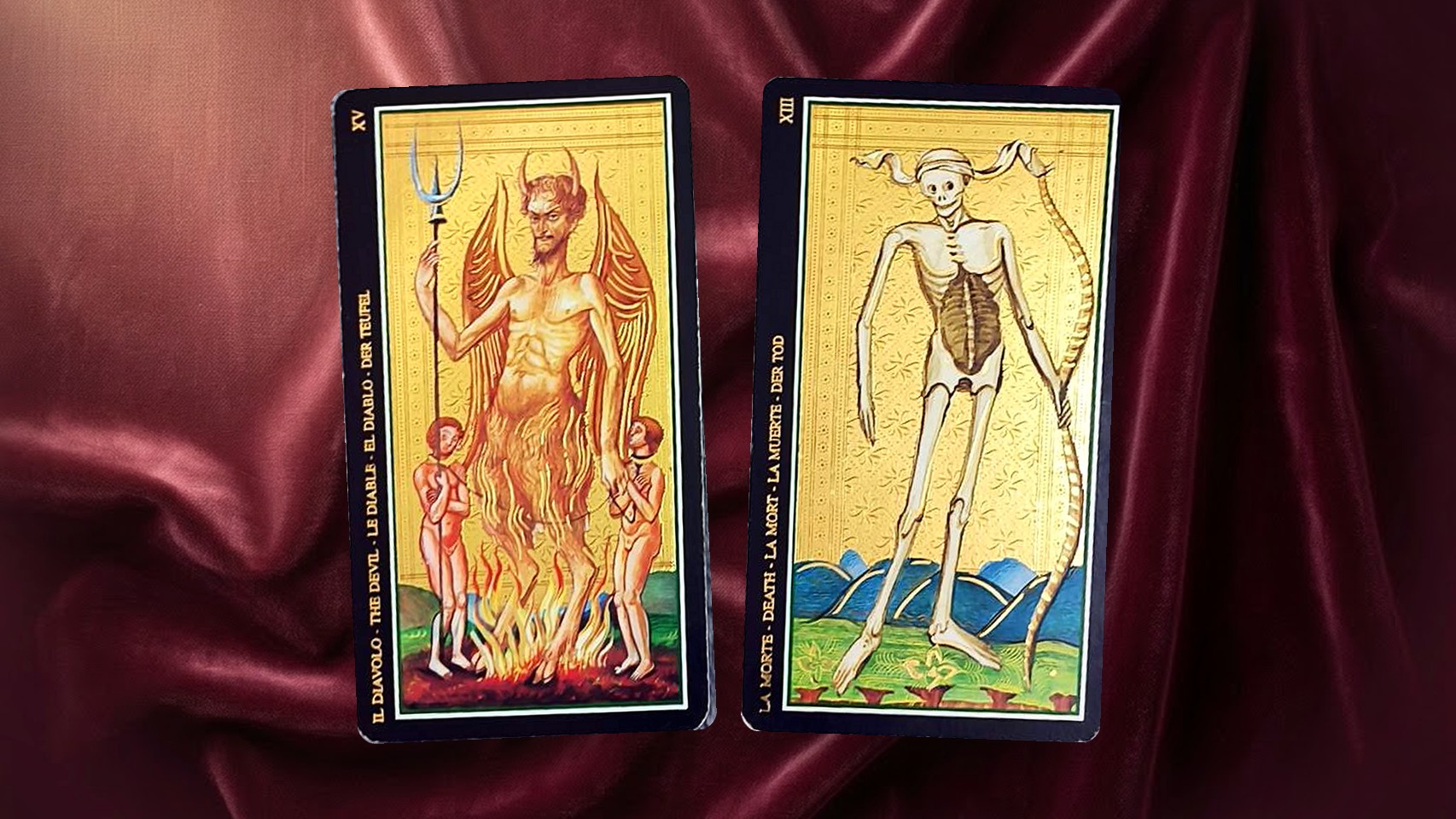
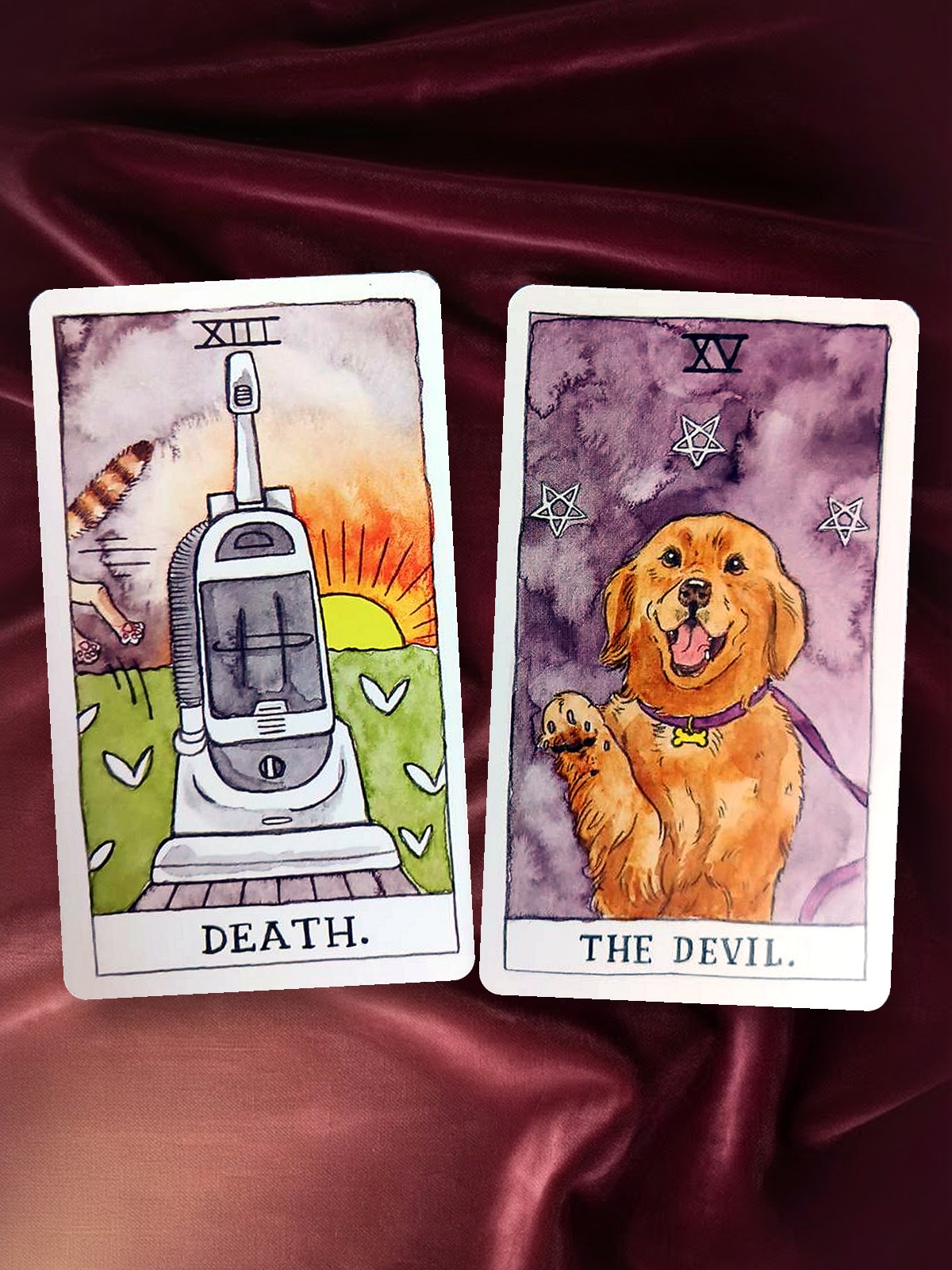
The Devil card too. Here it's a dog, looking almost innocent. To the person reading it's cute; to the cat in the picture, maybe not. Change the point of view, and an explanation you took for granted needs rethinking.
The same name doesn't mean you can ignore the picture
I wouldn't translate the vacuum cleaner straight into "time to clean up". Nor would I read every version as exactly the same sentence just because it's called Death.
First look at what it does. Who is affected? Who is running? Is the thing in the picture a threat, or just a change we don't like? These details give a familiar meaning more to talk about.
But keep a sense of proportion. The dog is the image this deck chose; it doesn't mean dogs are bad. The vacuum cleaner is an everyday metaphor, not an object you're bound to meet if you draw the card.
Try comparing, and don't look up the answer yet
Put two versions of the same card side by side. Write three sentences about what you can see in each, and for now avoid common reading words like "transformation", "bondage" or "energy".
Then think: where are the two pictures alike? Where do they make you feel differently? Would you notice the same detail if the question were about work as if it were about friends?
Only then look up the meaning and the author's notes. What matters at this step is telling apart what's drawn in the picture, what's your own association, and what comes from established reading habits; who's right comes second. Once you can separate them, you're less likely to present an association as fact.
Card meanings are worth learning. Just keep looking at the pictures after you've learned them.
The exercise uses existing photos of the studio's cards. This piece is Pentacles Studio's own image comparison and teaching view, not a translation of the deck creators' text.