
Learning tarot
Where did tarot come from? From the playing cards of the Milan court to the Rider-Waite deck
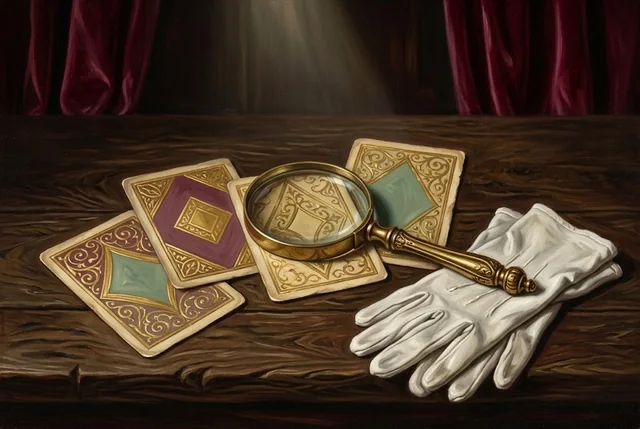
That tarot comes from ancient Egypt is a widely repeated claim. But the earliest tarot cards and documents we can confirm point to fifteenth-century Italy.
What's more certain is this: in the fifteenth century, courts in northern Italy were playing a card game. Besides the usual four suits, it had an extra set of "triumph" cards (trionfi), later called tarocchi.
A few key dates
- Around 1450: the Visconti and Sforza families of Milan commissioned hand-painted decks, with gold leaf and fine brushwork. Today these are called the Visconti tarot.
- 17th and 18th centuries: the Marseille tarot became popular in France. The designs settled into fixed forms, and the minor cards mostly showed only the suit symbols and their number.
- 1781: the French scholar Court de Gébelin claimed tarot held the wisdom of ancient Egypt. The idea spread widely, but has no basis.
- Late 18th century: Etteilla created cards made specifically for divination.
- 1888: the Hermetic Order of the Golden Dawn was founded in Britain and systematically linked tarot with astrology and the Kabbalah.
- 1909: the Rider-Waite deck, designed by A. E. Waite and drawn by Pamela Colman Smith, was published. Even the number cards had many scenes to read from.
- 1969: the Thoth tarot, conceived by Aleister Crowley and painted by Frieda Harris, was formally published.
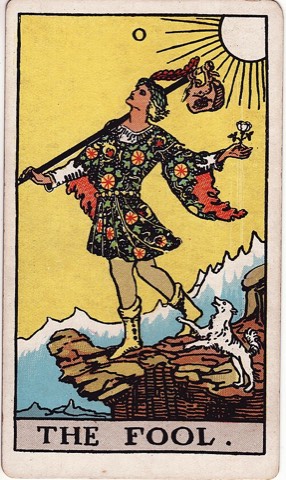
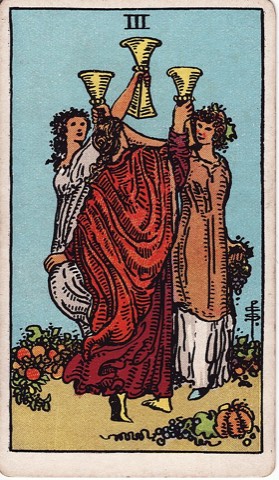
The Rider-Waite deck is the one I use most. The reason is simple: the minor cards have pictures too, clients can follow them, and we can talk while looking at the picture together. With the Three of Cups, for example, we can start from the three figures raising their cups and talk about gatherings, sharing or supporting each other.
I quite like knowing it started as a game. It reminds me that the cards are a tool, and not to turn them into something sacred.
Further reading: Stuart R. Kaplan, The Encyclopedia of Tarot; Ryuji Kagami, タロットの秘密 (in Japanese); Ryuichi Izumi, タロット大全 (in Japanese). The full reading list and guide are in the tarot study room.
Common questions
Did tarot really come from ancient Egypt?
What's the difference between the Rider-Waite and Marseille decks?
If you'd like to talk about your own situation, start with the readings on offer.