Learning tarot
The Celtic Cross: ten cards, read in three parts
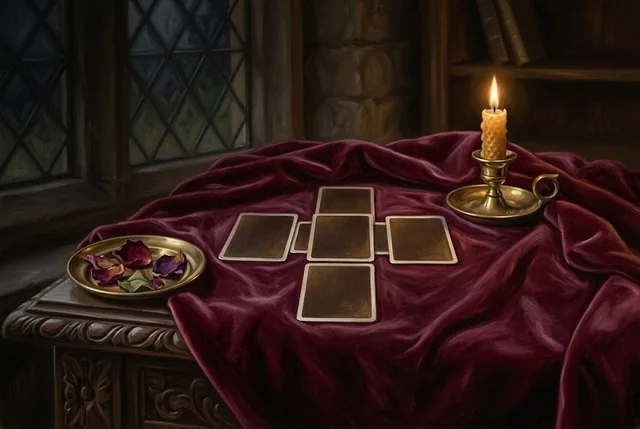
The Celtic Cross uses ten cards at once. When you start practising, it's easy to look up ten meanings and still not know what the spread is saying.
Where do you start reading?
First, split it into three parts
- 1The present
- 2The obstacle
- 3The root
- 4The recent past
- 5The goal
- 6What comes next
- 7You
- 8Surroundings
- 9Hopes and fears
- 10Outcome
- The central cross (1, 2): the present situation, and what sits across it.
- The outer cross (3 to 6): the root, what has just passed, your goal, and what you'll meet next.
- The staff on the right (7 to 10): you, your surroundings, hopes and fears, and the likely outcome.
The reading order
Try reading it this way instead of rushing through the numbers in order.
Read 1 and 2 first, and put them into one sentence: "This is where things are, and this is where it's stuck."
Then look at the likely outcome in card 10 and compare it with the present.
Then go back to cards 3 to 9 and see which background, hopes and outside factors will shape how things develop.
Card 9 is the most interesting
Hopes and fears share one position.
Often what we want most is also what we fear most. You want a promotion, and you're afraid you won't cope once you get it. This card often lays that contradiction out.
A practice example
The question: should I take a new job offer?
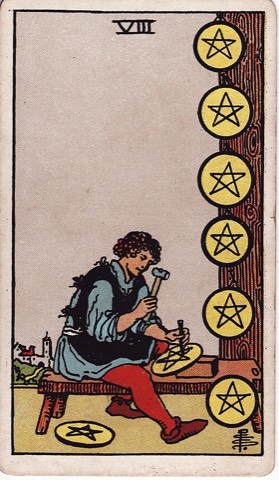
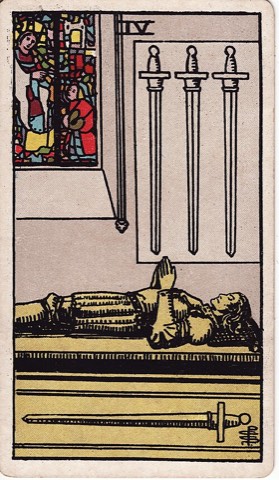
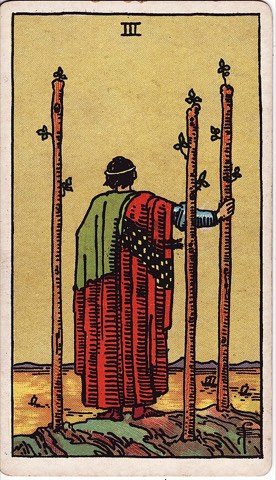
1, Eight of Pentacles: you're doing your current job steadily and know it well. 2, Four of Swords across it: but you're tired, and your mind wants to stop. 10, Three of Wands: looking outward, things are starting to get a response.
For now you could read it like this: you've mastered the familiar job, but tiredness may be clouding your judgement; the new offer has things worth looking into, so first be clear about your own workload and the other side's terms.
Only then look at 3 to 9, to find what's making you so tired and what the offer would ask you to prepare.
Don't use it for very small questions
If you only want to know whether to send a message today, you usually don't need ten cards. The Celtic Cross suits questions with some background that touch several different areas. There's more than one version of the positions, so write down the definitions you're using before you draw.
Diagrams of every spread are in the tarot study room: spreads.
Common questions
Can beginners use the Celtic Cross?
Why is the second card laid sideways?
If you'd like to talk about your own situation, start with the readings on offer.